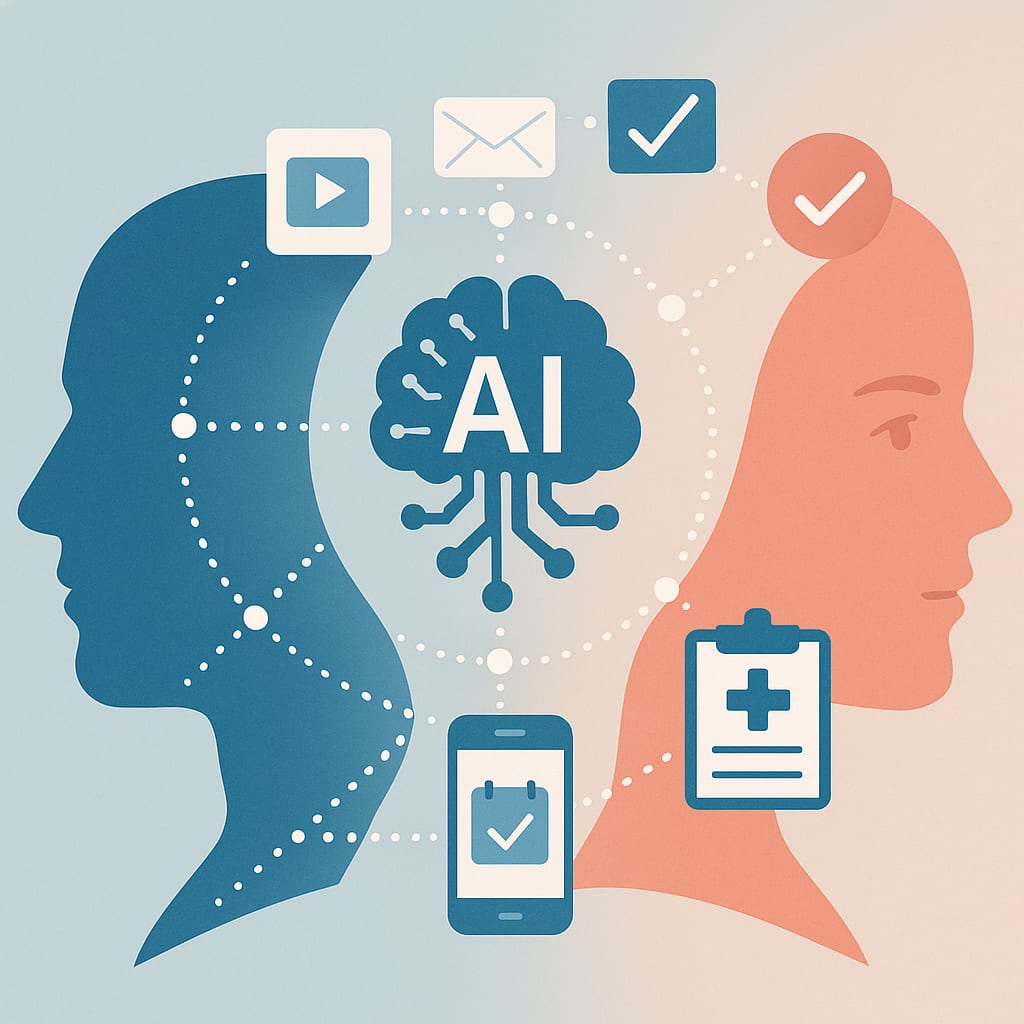
The modern patient journey is rarely a straight line. People research, compare, hesitate, and return several times before deciding to book. Along the way, clinics lose far more prospective patients than they realise. Yet with carefully deployed AI, that journey can feel clearer, calmer, and more supported - for both patient and clinic.
This isn’t about replacing human interaction. It’s about removing friction so that your team can show up where they’re needed most, while AI handles the repetitive, time-sensitive tasks that often slip.
Below is a condensed, clinically meaningful overview of the full pathway from first click to first appointment - and where AI can strengthen every step.
Where Clinics Typically Lose People: Five Key Drop-Off Points
Every practice, whether private or NHS, faces predictable leakage points:
- The fleeting website visit - People click onto your site with intent, but unless they quickly understand how you can help, they drift away. An AI-driven assistant can guide them within seconds, answering core questions and pointing them to relevant services before attention drops.
- The unanswered enquiry - This is the biggest leak. UK healthcare data repeatedly shows that first contact is where most leads fail to convert. Calls go unanswered, forms sit in an inbox, or replies take too long. AI can respond instantly - with warmth - buying your team time to follow up properly.
- The fading interest phase - Someone receives a reply… then silence. Research suggests it can take several touchpoints before a patient feels ready to book. Most clinics make one attempt. AI keeps the conversation alive with well-timed nudges, without overwhelming the reader.
- The booking bottleneck - Patients who are ready to book often drop off when scheduling is slow or overly manual. AI-enabled online booking allows patients to secure a slot the moment they’ve made the decision, whether that’s 10am or 10pm.
- The pre-appointment wobble - People forget, worry, or become unsure. No-shows aren’t usually about lack of interest; they’re about lack of contact. Automated reminders, clear preparation messages, and supportive check-ins help maintain momentum.
Addressing these five points transforms the entire experience - and directly increases conversion.
Reducing Friction While Keeping the Personal Touch
Patients don’t want a robotic experience. They want fast clarity and steady support.
AI excels when it feels like a natural extension of your clinic’s tone:
- Responses written in your clinic’s voice
- Personalised follow-up based on what the patient asked or read
- Friendly nudges rather than corporate scripts
- Clear handovers to real humans at the right moments
At Greenland Medical, for example, AI manages the routine steps - confirming enquiries, sending intake forms, organising reminders - while humans handle the nuanced conversations that matter clinically. Patients often comment on how ‘supported’ they felt from the first interaction.
The Science of Timing: Why When You Respond Matters
Speed isn’t everything, but it matters more than most clinics realise.
Studies consistently demonstrate that responding to a new enquiry within minutes drastically increases the likelihood of that person becoming a patient. Leave it an hour, and the odds fall sharply.
Once the initial contact is made, the timing of follow-up matters just as much:
- A message 20-30 minutes after browsing your site can keep curiosity alive
- A warm follow-up 24-48 hours after initial contact can re-centre decision-making
- A reminder 2-3 days before an appointment reduces cancellations
- A check-in a week after issuing a treatment plan can prevent loss of momentum
AI’s value lies in precision. It doesn’t forget. It doesn’t delay. It delivers the right message at the moment the patient is most receptive.
Behaviour-Based Segmentation: Personalising at Scale
Not every prospective patient behaves the same way. Some read every page of your website. Some skim. Some call immediately. Some want reassurance. Others want concise, practical information.
Behaviour-based segmentation allows you to:
- Track which pages someone visited
- Notice whether they opened an email
- Identify what they downloaded
- Understand what they searched for
- Gauge how urgently they want help
AI can adapt follow-up accordingly:
- Patients who read a long article on hormones get educational messages
- Patients who enquired about pricing receive clear guidance on booking
- Patients who hovered over cognitive health content might receive a case study
- Patients who haven’t opened an email get a shorter, more direct message
This kind of tailoring feels almost handcrafted - yet it scales effortlessly.
Why This Matters for Modern Clinics
A patient’s decision to book is shaped less by single moments and more by tiny interactions that build confidence. When these touchpoints are slow or inconsistent, people drift towards inaction or to another provider.
When they’re timely, thoughtful, and helpful, the pathway feels clear and reassuring.
Clinics using AI in this way typically see:
- Fewer missed enquiries
- Higher rates of booking after initial contact
- Reduced no-shows
- Patients arriving better prepared and more informed
- Teams with more time for genuine clinical conversations
For practices serious about quality care, AI isn’t about automation for automation’s sake. It’s about creating a smoother, more humane journey - one that respects the patient’s time, attention, and emotional state.
A Better Journey From Start to Finish
The shift from first click to first appointment shouldn’t feel like an obstacle course. With well-designed AI support, it can feel structured, calm, and reassuring.
People find your clinic. They feel welcomed. They receive clarity quickly. They can act when they’re ready. They arrive feeling confident and informed.
That’s the patient journey at its best - and AI helps make it possible, step by step, without replacing the human warmth that sits at the heart of good medicine.